

Most coverage of the BIS Directive Allocation Order has treated it as a domestic policy story. For anyone outside the United States building a non-Chinese pCAM supply chain, it is a sourcing story, and the practical effect arrives in weeks rather than years. One procurement channel closes on August 27. A different one stays open, and the material moving through it is further along the value chain than what it replaces.
The rule itself is covered in our breakdown of the BIS Directive Allocation Order, and the question of exactly which codes it reaches is worked through separately. This piece is written for the buyer rather than the seller.
What the Non-Chinese pCAM Supply Chain Looks Like Today
Precursor cathode active material is the intermediate between refined metal salts and finished cathode. The International Energy Agency tracks it as its own category, covering both nickel-based and lithium iron phosphate precursors measured on manufacturing capacity.
The numbers describe a concentrated picture, and concentration has been increasing rather than easing. The IEA's Global Critical Minerals Outlook 2026 reports that supply concentration in refining continued to edge higher for most minerals during 2025, and that excluding rare earths, the average share held by the top refining country rose to 72 percent in 2025 from 70 percent in 2023. Over the preceding two years, the leading refining countries accounted for more than three quarters of total growth in refined supply, and in several markets, including manganese, nickel, and graphite, effectively all of the growth came from the dominant supplier.
Recycling has followed the same pattern. The IEA's 2025 edition found that two thirds of global battery recycling capacity growth since 2020 occurred in a single country. A cell producer trying to build recycled content into its supply chain has therefore been solving two problems at once: finding recycled material, and finding it somewhere that does not reproduce the concentration the diversification effort was meant to address.
This is a description of market structure rather than a judgment about it. Refining capacity went where the capital and the offtake were. The relevant question for a procurement team is not how the structure arose but which routes are open.
The Channel That Closed and the One That Stayed Open
From August 27, black mass generated in the United States has to be sold to a US person, in full, every month, unless BIS grants an exception on an application where the burden rests with the applicant. For a cathode producer in Korea, Japan, or Europe that had been buying US-generated black mass and refining it at home, that channel is now conditional on someone else's discretionary approval.
The order reaches four Schedule B codes, all of them waste and scrap headings. Refined intermediates do not enter under those codes. A buyer who wants US-origin recycled units can still obtain them, provided the refining step happens before the material crosses the border rather than after.
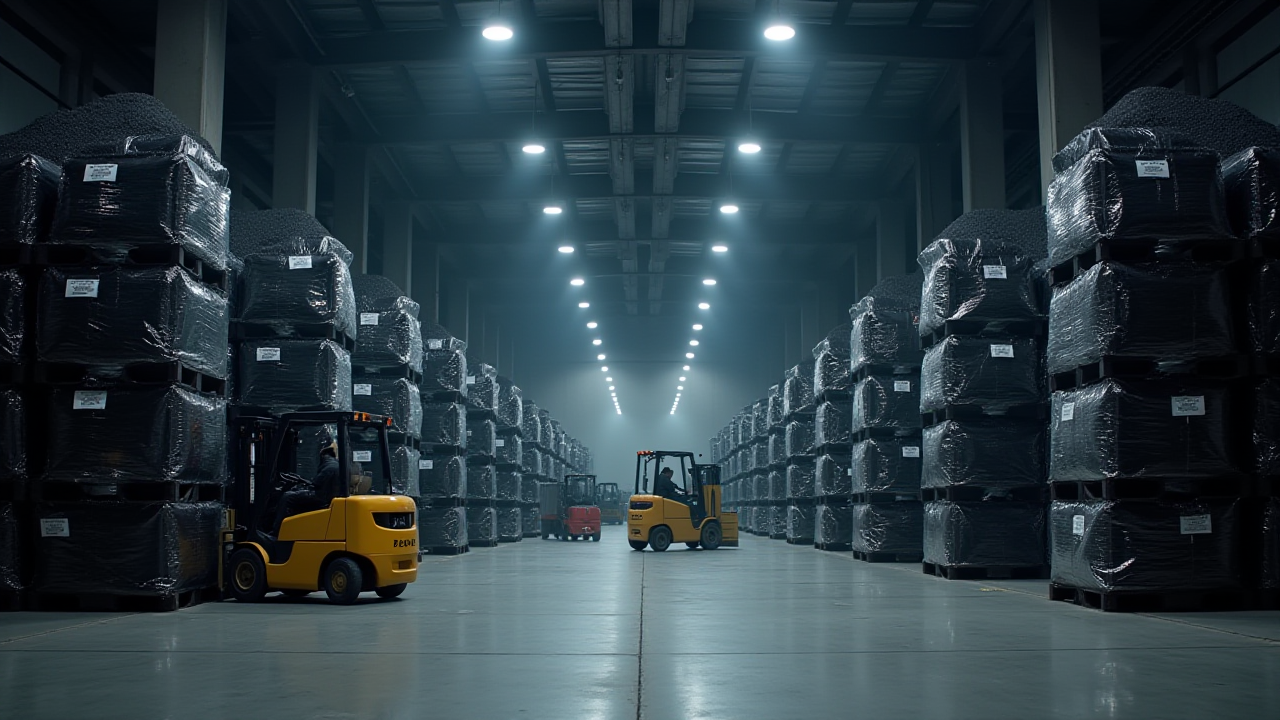
Green Li-ion's Atoka operation is one working example of that shape. Black mass goes in, and what leaves the site under an export contract is NCM hydroxide, pCAM, technical-grade lithium carbonate, or recycled graphite, none of which enters under the codes the order lists.
That is a real change in what gets purchased. Instead of buying shredded feedstock and running a hydrometallurgical circuit at home, the buyer acquires NCM hydroxide, pCAM, or lithium carbonate that has already been through that circuit. The refining margin moves to the United States. The material that arrives is closer to cathode and needs less work to get there.
Whether that trade is attractive depends on the buyer's own position. A producer with underutilized refining capacity gives up throughput. A producer without that capacity, or one whose expansion plans were contingent on feedstock that is no longer freely available, gets a route that requires no new capital.
Recycled Feedstock Is Structurally Less Concentrated Than Mined Feedstock
There is a reason recycled units are worth pursuing beyond the recycled label itself.
Mined supply originates where the geology is. Refined supply originates where the plants were built. Both are concentrated by the nature of the asset. Recycled feedstock originates wherever batteries were sold and used, which means it is distributed across every market with a vehicle fleet and a consumer electronics base.
That distribution does not automatically translate into distributed refining, and to date it has not. The recycling capacity growth figures show the second stage clustering in the same places as primary refining. But the underlying feedstock is genuinely dispersed, which makes recycling one of the few points in the chain where diversification is a matter of where processing capacity gets built rather than where a deposit happens to sit.
Where the processing capacity is modular rather than centralized, that lever gets easier to pull. A modular line can be sited closer to the feedstock, in the number the local volume supports, rather than requiring a single large facility and the catchment to justify it. Siting remains constrained by utilities, effluent handling, workforce, and local approvals, so the form factor widens the set of viable locations rather than removing the question. Green Li-ion's deployment model at Atoka is built on that logic, and it is the same logic a buyer applies when assessing whether a supplier's capacity can grow alongside its own demand.
The BIS order pushes on exactly that lever. It does not create refining capacity. It makes domestically generated feedstock available only to whoever has built it.
Europe's Timeline Points in the Same Direction
European buyers face a second driver with a fixed date attached.
Article 8 of EU Battery Regulation 2023/1542 sets binding minimum recycled content for industrial batteries, SLI batteries, and electric vehicle batteries from 18 August 2031, at 16 percent for cobalt, 6 percent for lithium, and 6 percent for nickel, with higher thresholds following in 2036. Our breakdown of the EU recycled content targets covers the phase-in in detail. The framework is also still moving, with Regulation (EU) 2025/1561 amending the due diligence obligations in July 2025.
Nothing binds today. What the 2031 date does is set a deadline for building the supply relationships and the documentation trail that will be needed to demonstrate compliance, and those relationships take longer to establish than the material takes to ship. A cathode producer that waits until the obligation bites is competing for recycled units against everyone else who waited.
Buying a refined intermediate from an identified processor gives a more tractable documentation starting point than a bulk scrap shipment, because the chain has fewer handoffs and the counterparty is a single named facility. That is a practical observation rather than a compliance opinion, and the calculation methodology that will govern how recycled content is evidenced is a matter for the delegated acts rather than for a supplier.
The Anode Side Gets Less Attention and Has Fewer Options
Cathode dominates the conversation because that is where the cobalt and nickel value sits. The anode side of a diversification strategy is harder, and the same order touches it.
Looking forward rather than at today, the IEA projects that battery-grade graphite will remain among the most concentrated refined products in its outlook, with the dominant supplier holding around 80 percent of supply in 2035, a level comparable to its projection for rare earth elements. That is a forecast under stated policies rather than a current measurement, and the point of citing it is that the concentration is not expected to resolve on its own over the next decade.
Recovered graphite from black mass is one route that sits outside that structure, which is the subject of our analysis of the recycled graphite supply chain. Green Li-ion recovers graphite as one of four products off the same line that produces pCAM, lithium carbonate, and NCM hydroxide, which means an anode-side sourcing conversation and a cathode-side one can involve the same counterparty rather than two separate qualification processes. It is also material that the BIS order affects indirectly. Graphite appears inside the regulatory definition of black mass as an anode material that may be present in shredded scrap, so a buyer sourcing graphite-bearing black mass from a US supplier is buying covered material. A buyer sourcing refined recovered graphite is not.
For a procurement team running a genuinely non-Chinese pCAM supply chain alongside an anode sourcing strategy, that distinction is worth checking before August 27 rather than after, because the two materials often move under the same contract.
What a Buyer Can Reasonably Check
None of the following is a compliance opinion, and the classification questions belong with a customs broker or trade counsel rather than with a supplier. But there are questions a buyer can put to a counterparty without needing either.
The first is what the material actually is at the point it leaves the United States. Shredded scrap and a precipitated chemical intermediate are different goods with different codes, and the distinction is physical rather than contractual. A supplier should be able to say plainly which one is being shipped.
The second is whether the counterparty holds, or has applied for, a BIS exception, and on which of the enumerated grounds. Where a supply arrangement depends on one, the buyer is exposed to a decision made by a third party on a timeline nobody controls.
The third is whether the arrangement involves any transfer between affiliated entities. The order treats deliveries to affiliates and between divisions under common ownership as sales, so a corporate structure that routes material through a related party does not sit outside the requirement.
The fourth concerns duration. The order runs to 27 August 2027 unless extended, and BIS has stated it may add further materials by publication in the Federal Register. A supply relationship structured around the current scope should account for the possibility that the scope changes.
There Is Evidence the Policy Lever Works
The most useful finding in the IEA's 2026 outlook is the exception to its own trend.
Rare earth refining was the one area where concentration declined during 2025. The IEA attributes that to new projects in the United States and increased production in Malaysia, and states directly that the case highlights the role of targeted policy and investment support in enabling diversification.
That is a neutral authority observing that concentration in a refining market responded to deliberate policy support within a measurable timeframe. The Directive Allocation Order is a different instrument aimed at a different material, but it operates on the same premise: make the feedstock available domestically and the processing capacity follows.
For a buyer, the implication is about timing rather than politics. If US refining capacity for recycled battery materials expands over the next several years, the supplier relationships that exist when it does will have been formed now, under a rule that makes domestic refining the only reliable route for US-origin material.
What Changes for Procurement Outside the United States
The immediate work is diagnostic. Any contract for US-origin material should be checked against the four covered codes and the black mass definition, because the answer determines whether the counterparty needs an exception. Where an exception is required, the timeline is not in the buyer's hands.
Where the requirement is recycled units rather than shredded feedstock specifically, US-refined intermediates satisfy it without touching the order.
Green Li-ion's operation at Atoka, Oklahoma sits on the refined side of that line. GREEN HYDROREJUVENATION™ processes unsorted black mass of mixed chemistries into four finished products, namely precursor cathode active material, technical-grade lithium carbonate, recycled graphite, and NCM hydroxide, with pCAM produced at 99 percent purity through a single-step conversion rather than the shred-and-ship model the order restricts. The lines are modular, which means capacity is added in increments rather than in a single build. The company has a presence across the United States, Singapore, Korea, Germany, and Australia, which is relevant for manufacturers coordinating recycled supply across more than one jurisdiction and more than one regulatory regime.
Procurement teams building a non-Chinese pCAM supply chain that includes US-origin recycled units can begin partnership conversations with qualified recyclers such as Green Li-ion, whose output sits outside the codes the order restricts.
The Honest Summary
The BIS order closes one procurement channel and leaves another open. US-generated black mass has to stay domestic from August 27 unless BIS grants an exception. US-refined intermediates are not covered by the order, because every code it lists is a waste and scrap heading.
For buyers building a non-Chinese pCAM supply chain, the practical consequence is a change in what gets purchased rather than whether US-origin recycled units are available. The refining margin moves to the United States and the arriving material is further along the chain.
Two things are worth holding lightly. This article describes structural incentives, not surveyed buyer intentions. It does not claim to know what any particular cathode producer in Korea, Japan, or Europe plans to do, and anyone reading it as a market forecast is reading more into it than the evidence supports. And the EU recycled content minimums are five years out, which is close enough to matter for supply relationship planning and far enough away that treating them as present-day pressure would be misleading.
The IEA's rare earth finding is the strongest single piece of evidence in this piece, and it is worth reading in the original rather than through anyone's summary, including this one. Concentration in a refining market moved when policy support was applied. Whether the same happens for recycled battery materials is a question the next several years answer, not this article.

.svg)