
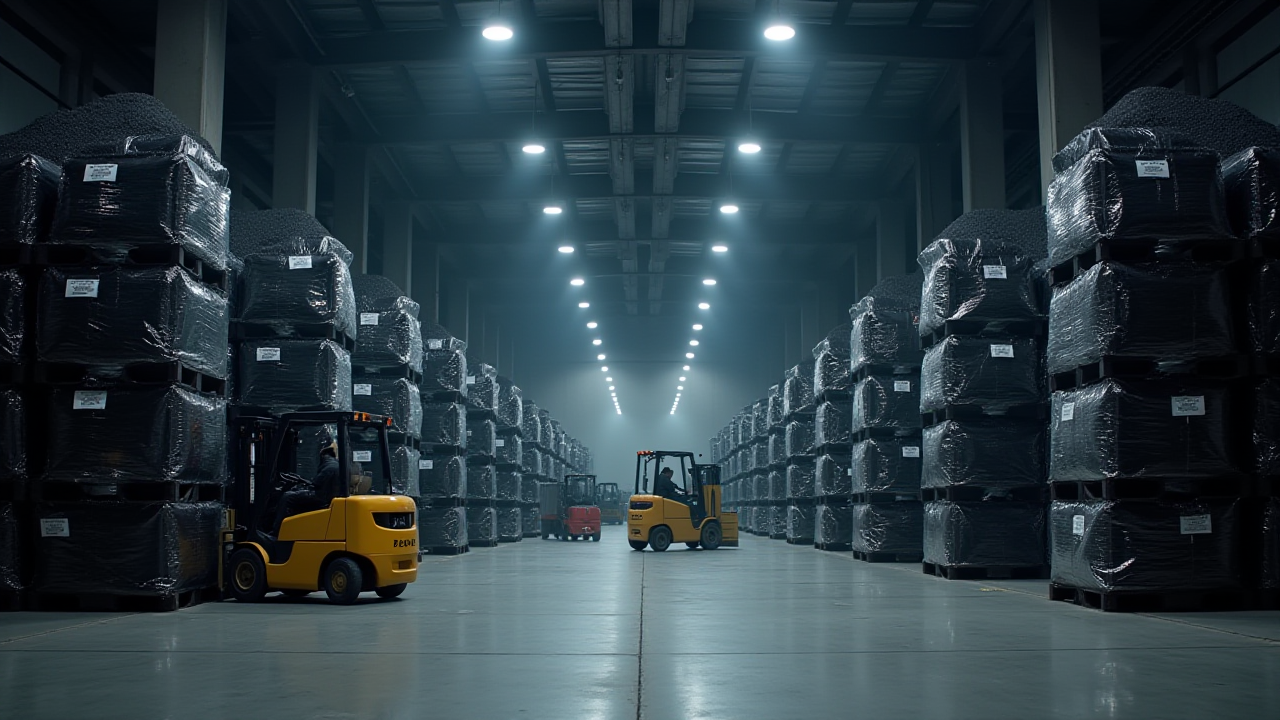
A black mass export license has become one of the most closely watched documents in the US battery recycling supply chain. Since late August 2026, shipping black mass out of the United States has required federal authorization, and in October 2026 the government began granting the first approvals. Each black mass export license tells a story about where the country can and cannot process its own recovered battery material, and the early approvals point to a single conclusion: the United States can produce black mass faster than it can refine it at home. That gap, not the paperwork, is the real subject worth understanding.
This article explains what a black mass export license is, why the approval process exists, and what the first decisions reveal about domestic refining capacity. It is a descriptive overview, not legal or trade-compliance advice; companies with export exposure should consult qualified trade counsel.
From the desk of Matthew Cooper, VP of Business Development, Green Li-ion
Processors weighing how the export rules affect their material flows can reach me directly. Connect on LinkedIn or through the Green Li-ion contact page.
What a black mass export license is and why it exists
Black mass is the granular intermediate left after lithium-ion batteries are shredded. The federal Directive Allocation Order published in August 2026 defines it as shredded lithium-ion battery scrap containing cathode material such as lithium, cobalt, nickel, and manganese, along with anode material including graphite and silicon. Under that rule, sellers must allocate 100 percent of monthly black mass sales to domestic buyers unless they obtain an adjustment or exception in advance. A black mass export license is that exception: written authorization to ship covered material abroad despite the default domestic-sales requirement.
The rule took effect on August 27, 2026, and currently runs through August 27, 2027. According to the Bureau of Industry and Security, the measure is necessary to secure the supply of recoverable critical minerals deemed essential to national defense. The agency also set up a rolling process for companies to request a black mass export license, and it opened a public comment period that runs through November 4, 2026. Green Li-ion covered the mechanics of the rule in detail when it landed, in a dedicated look at what August 27 changed for the recycling supply chain.
The first approvals point to a refining-capacity gap
Here is the part that matters strategically. If the United States could refine all of its own black mass domestically, few companies would need a black mass export license at all. The material would simply move to a domestic refiner. The fact that the government began granting large export authorizations within weeks of the rule taking effect signals the opposite: the country is generating more black mass than its domestic refining base can currently absorb.
That is not a criticism of the rule or of any company seeking an exception. It is a structural feature of how the US recycling industry grew. Collection and shredding capacity, the front end that produces black mass, scaled quickly. Refining capacity, the back end that turns black mass into battery-ready material, did not keep pace. A black mass export license is, in effect, a pressure-release valve for that imbalance while domestic refining catches up.
Why black mass piles up faster than the US can refine it
Two things drive the buildup. The first is feedstock timing. Much of today's recycling feedstock is manufacturing scrap from cell production, which arrives steadily and in volume, and the International Energy Agency notes that recycling output is shaped by this feedstock flow more than by how much processing capacity a company builds, as its Global EV Outlook 2026 discusses. Shredders turn that scrap into black mass well before the matching refining capacity exists to take it further.
The second is the difficulty of the refining stage itself. Shredding is comparatively easy to build. Refining black mass to battery-grade material is capital intensive, requires permitting, and has to tolerate the variable chemistry and impurity load of mixed incoming material. Green Li-ion examined this split between front-end and back-end capacity in its analysis of domestic absorption capacity versus US feedstock volume. The short version is that the United States has more capacity to make black mass than to finish it, and a black mass export license is the current workaround.
The quality problem behind the capacity gap
The reason refining lags shredding is quality. Producing black mass is mechanical; producing battery-grade material from it is chemical, and far harder. Incoming black mass varies by the chemistry of the batteries it came from and by the impurities that shredding leaves behind, so a refiner has to handle a moving target rather than a uniform input. Cathode makers reject material that carries contamination, and the specifications are strict enough that small impurity levels can disqualify an entire batch. This is why a black mass export license is often the path of least resistance in the short term: shipping to an established overseas refiner can be simpler than waiting for domestic capacity that meets specification.
There is also a distinction buyers should keep straight. Technical-grade lithium carbonate is not the same as battery-grade lithium carbonate, and the gap between them is exactly the refining work that domestic capacity has to perform. A recycler that can take black mass to battery-ready output domestically removes both the export step and the quality uncertainty in one move, which is the capability the current capacity gap is calling for.
Chemistry mix compounds the challenge. As lower-cobalt and iron-phosphate chemistries gain share, a refiner built around a single cathode type sees its economics shift with every change in the incoming stream. Flexibility to process mixed, unsorted black mass without pre-separation is therefore part of what domestic refining capacity has to offer if it is going to reduce reliance on a black mass export license across the full range of batteries reaching end of life.
How the export question looks globally
The capacity imbalance is not unique to the United States, and the global picture explains why domestic refining has become a resilience question rather than only an economic one. Recycling capacity for finishing black mass is concentrated in a small number of regions, which means material recovered in one country has often traveled a long way to be refined. The International Energy Agency frames recycling as a growing future source of critical minerals, but one whose near-term contribution is limited by both feedstock availability and the geographic distribution of refining capacity.
International waste-movement rules add another layer. Black mass and spent batteries can fall under the Basel Convention framework governing transboundary movement of hazardous materials, which means an export decision is rarely as simple as finding a willing buyer abroad. The interaction between a domestic black mass export license and international movement rules is one more reason companies treat export as a managed exception rather than a default channel.
Seen that way, a black mass export license is a snapshot of a wider rebalancing. Regions that built shredding without matching refining are now deciding whether to keep exporting intermediates or to build the finishing capacity at home. For the United States, the policy answer in 2026 is clearly tilted toward building domestic capacity, and the export approvals are the measured exception that keeps material moving while that build-out happens.
What a black mass export license means for domestic processors
For companies that refine black mass inside the United States, the export-license era raises the strategic value of domestic processing. Every ton of black mass refined at home is a ton that does not need a black mass export license, does not travel abroad for finishing, and does not send recovered value out of the domestic supply chain. The policy direction clearly favors keeping both the material and its refining onshore.
This is where the capacity gap becomes an opportunity rather than only a constraint. Processing that compresses the stages, taking unsorted black mass directly to finished battery material in one domestic operation, addresses exactly the bottleneck the export approvals expose. For reference, Green Li-ion's GREEN HYDROREJUVENATION technology converts unsorted black mass of mixed chemistries into precursor cathode active material, technical-grade lithium carbonate, and recycled graphite, with pCAM produced at 99 percent purity. At Atoka, Oklahoma, American Li-ion has been running Green Li-ion's technology since May 2024, with capacity expanding from 2,000 to 8,000 metric tons per year. The point is not any single plant but the model: domestic refining capacity is what shrinks the need for a black mass export license in the first place. Procurement teams evaluating domestic recycled material supply can begin partnership conversations with qualified recyclers such as Green Li-ion.
What the approvals do not mean
It is easy to read the first export approvals as a sign that the domestic rule is failing, and that reading is wrong. The approvals are built into the rule as a deliberate exception process, not a loophole around it. They let recovered material keep moving while the slower work of building domestic refining capacity continues, which protects both recyclers and the manufacturers who depend on the materials. A black mass export license granted today is consistent with a policy whose medium-term goal is to need far fewer of them. The measure of success is not zero exports on day one; it is a declining reliance on exports as domestic finishing capacity comes online.
What exporters are weighing during the comment window
With the comment period open through November 4, 2026, companies with export exposure are weighing several practical questions. Existing contracts that assumed offshore delivery need review for compliance risk. The time and documentation required to secure a black mass export license have to be built into planning. And the possibility that the allocation order is extended past August 2027, or widened to other materials, affects whether a company invests in domestic refining relationships now or waits. These are decisions for trade-compliance and commercial teams together, and they are the reason the rule's finer points matter well beyond the companies that export directly.
What to watch next
Several things are worth tracking. The comment period on the rule runs through November 4, 2026, so the terms under which a black mass export license is granted could shift. The allocation order is currently set to expire in August 2027 unless the agency extends it, which would change the planning horizon for exporters and domestic refiners alike. The agency has also indicated it may issue further allocation orders covering other recoverable materials, which would widen the scope beyond black mass and tungsten. None of this is settled, and companies with material at stake should follow the rulemaking directly and take trade-compliance advice rather than relying on general summaries.
Frequently asked questions
Does a black mass export license let a company export freely? No. It authorizes specified exports under terms set by the agency, as an exception to the default requirement that monthly black mass sales go to domestic buyers.
Why would the government restrict black mass exports and then grant licenses? The restriction aims to keep recoverable critical minerals available domestically. Licenses acknowledge that domestic refining capacity cannot yet absorb all the black mass the country produces, so some export is permitted while that capacity grows.
How does domestic refining reduce the need for a license? Material refined inside the United States never has to be exported, so it falls outside the export-license question entirely. More domestic refining capacity means fewer license requests.
The honest summary
A black mass export license is a narrow regulatory instrument with a wide strategic meaning. The rule behind it requires domestic allocation of black mass sales, and the exceptions granted since October 2026 show that the United States still produces more black mass than it can refine at home. The front end of the industry outran the back end, and export authorizations are the temporary bridge. The durable fix is domestic refining capacity that takes black mass all the way to battery-ready material, which is the direction both the policy and the market now reward. For companies deciding how to position against that shift, the practical move is to prioritize domestic processing. Teams ready to evaluate that can start a conversation with Green Li-ion. This overview is descriptive only and is not legal or trade-compliance advice.


.svg)