
The BIS Directive Allocation Order has an expiry date printed in the same table as the restriction. It was published on 6 August 2026, takes effect on 27 August 2026, and expires on 27 August 2027. That is 386 days from publication and 365 from the effective date. Anyone deciding to add domestic refining capacity in response to this rule is making that decision against a window, and modular battery recycling deployment is one of the few approaches that can act inside it.
The rule's scope and mechanics are covered in our breakdown of the BIS Directive Allocation Order, and the question of what domestic capacity currently exists is worked through in our analysis of US black mass processing capacity. This piece is about timing.
The Clock Is in the Rule, Not in the Commentary
It is easy to read the order as a permanent change in market structure. The text does not support that reading, and it does not need to.
Table 1 of the new Supplement No. 1 to 15 CFR Part 700 gives an effective date and an expiration date for each covered Schedule B code. All four run from 27 August 2026 to 27 August 2027. That is the window BIS published. The 386-day figure used here is derived by counting from the 6 August publication date, and the operative window from the effective date is 365 days. The Bureau of Industry and Security can extend the order, and it has stated it may determine that additional materials identified in the July 2026 Presidential Determination should be subject to an allocation order, announcing any such change through publication in the Federal Register. Comments on the temporary final rule close on 4 November 2026 under docket BIS-2026-0364.
Three things follow. The current restriction has a defined end. Its continuation is discretionary. Its scope can grow. None of those is a prediction about what the Bureau will do, and anyone claiming to know is guessing.
For a capacity decision, that uncertainty is the operative fact. It is not a reason to do nothing, and it is not a reason to treat the rule as permanent. It is a reason to prefer commitments that can be made and recovered inside a shorter horizon than the ones the sector has historically made.
What a Megaproject Actually Commits To
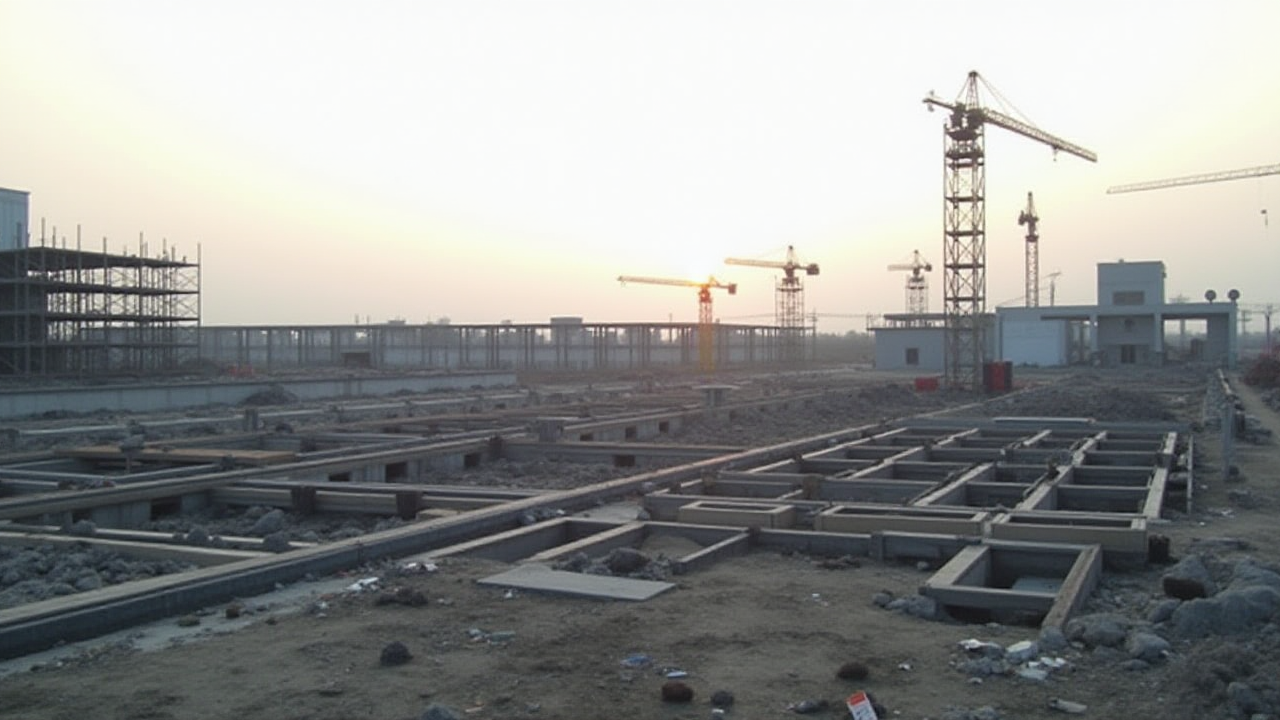
A large centralized refinery is a multi-year build. Engineering, procurement, construction, commissioning, and ramp all sit ahead of the first tonne of product, and the capital is committed at the front. Modular battery recycling deployment reverses that order, but the comparison only makes sense once the megaproject case is stated fairly.
One publicly traded US recycler's December 2024 Form 8-K, filed in connection with a DOE grant contract, illustrates the scale involved: a planned second facility at approximately 100,000 tonnes per year of battery materials, five times the throughput of its first plant. Projects at that scale are not decided against a twelve-month regulatory window, because they cannot be completed inside one.
That is not a criticism. Large plants deliver unit economics that small ones do not, and the sector needs them. But it means a megaproject announced this month is not a response to the allocation order in any meaningful sense. It is a bet on the demand environment that exists when the plant reaches production, which is several renewal decisions away.
There is a specific version of that risk worth naming. A large facility needs committed feedstock volumes to justify its capital, and those commitments have to be secured against a construction timeline. If the regulatory condition that made the feedstock available domestically lapses before the plant is commissioned, the feedstock competition the project was underwritten against returns. The capital is already spent by then.
What Incremental Capacity Commits To
Modular battery recycling deployment inverts the sequence. Capacity is added in defined increments, each sized to volume that already exists, and each capable of running before the next one is committed.
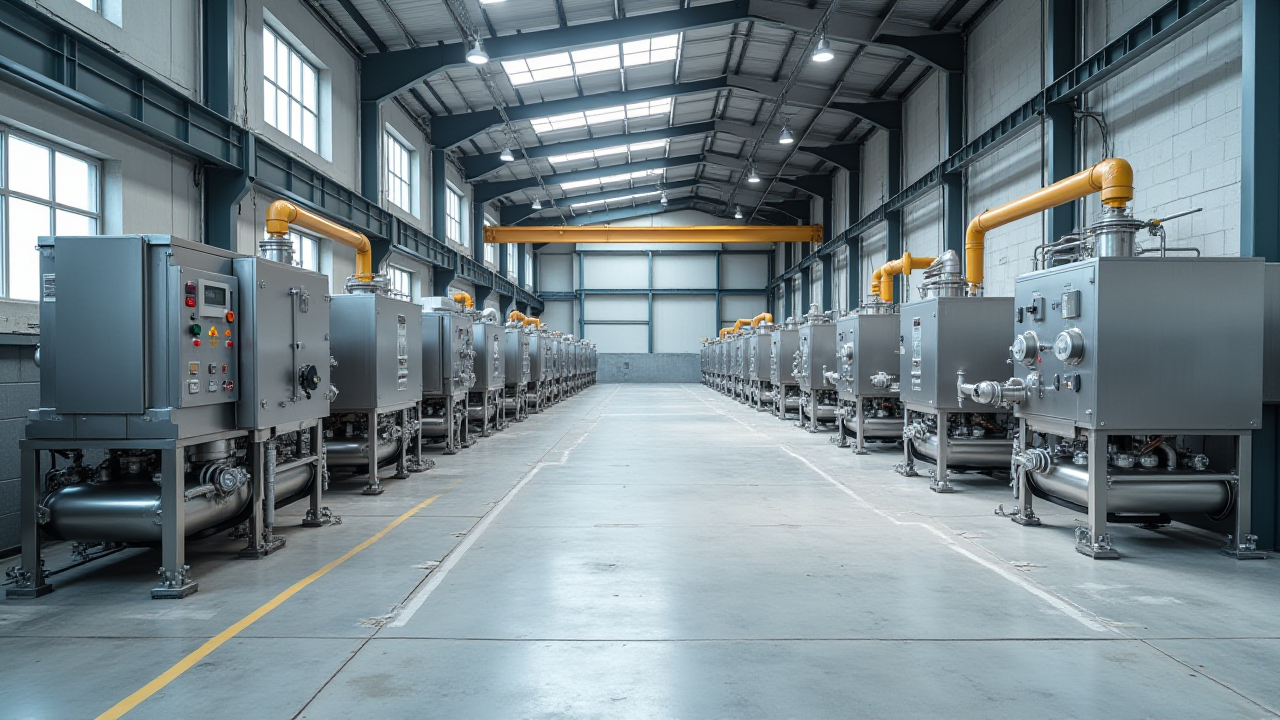
Green Li-ion's approach at Atoka, Oklahoma is built around modular lines added in increments rather than a single large facility. A line at that scale is a different proposition from a centralized refinery on every axis that matters to a timing decision. The capital per increment is smaller, so the exposure at any point is smaller. That is a statement about risk rather than about cost. Incremental capacity generally carries a higher installed cost per tonne than a large facility does, because the fixed elements repeat with each line rather than being spread across a single larger throughput. The trade is paying more per tonne of capacity in exchange for committing less at a time and learning between commitments. The regulatory footprint is smaller in emissions, effluent volume, and site impact. What that translates to in approval time depends on the jurisdiction and the site, so it is a statement about scale rather than about schedule. And critically, the decision to add the next line can be made after the previous one is running against real feedstock at real payables.
That last property is what makes it a response to a rule with an expiry date. An operator can add capacity now, inside the window, and observe what happens at the renewal decision before committing further. If the order is extended, the increments continue. If it lapses, the capacity that exists is already producing and was sized to volume that was already there.
The same modularity applies geographically, within limits. Lines can be sited closer to where the feedstock is rather than requiring all of it to travel to a single large facility. Siting is still constrained by utilities, effluent handling, workforce, and local approvals, so the form factor widens the set of viable locations rather than making the question free. Where material cannot leave the country, domestic freight becomes a larger share of the delivered cost than it was, which is the reason proximity matters more now than it did.
What Happens Between Now and the Renewal Decision
The window is not dead time. Three things happen inside it that affect where material goes afterwards.
The first is the comment process. Comments close on 4 November 2026, and the record built there is what the Bureau weighs when it decides whether to extend, modify, or let the order lapse. Anyone whose position depends on the outcome has a direct route to put that position on the record. What weight the Bureau gives any particular submission is not something an outside reader can know.
The second is contracting, and here the reasoning is commercial rather than documented. Qualifying a refiner involves trial volumes, specification agreement, and commercial terms, which is work that does not get repeated casually. It is reasonable to expect that some arrangements formed during the window persist past it, and reasonable to expect that others do not, depending on what the alternatives look like in September 2027. Nothing published establishes how sticky these relationships are in this sector. The argument here is that being contracted when the renewal decision arrives is more likely to help than to hurt, not that it guarantees anything.
The third is operating history. A line that has been running for a year on real feedstock has performance data, recovery rates, and product specifications that a line still in construction does not. That plausibly matters for the offtake side as much as the feedstock side, on the assumption that a buyer qualifying a recycled intermediate weighs production history against design assumptions. That is an assumption about buyer behaviour rather than something surveyed.
Green Li-ion's position on all three is a function of already operating rather than of anything the rule did. The Atoka lines are producing, the products are specified, and material moves under a binding offtake agreement with commodity trader WMC running through 2030. The order changes the competitive environment around that position. It did not create it.
The Cost of Waiting for Certainty
The instinct to wait for the renewal decision before committing capital is understandable and, for a megaproject, correct. For incremental capacity it inverts the logic.
Waiting means arriving after the contracting has happened. It means competing for feedstock against operators who have a year of relationship history, and competing for offtake against products that have a year of production data. And it means doing so at whatever payables prevail once domestic buyers are no longer scarce.
The asymmetry is the point. Committing to a single large facility now risks capital against a regulatory condition that may lapse. Committing to one additional line now risks considerably less, and the downside if the order lapses is capacity that is already producing into a market that still needs the material, on the view that demand for recycled units rests on cell manufacturing volumes and on recycled content rules in other jurisdictions rather than on this order alone. That is a judgment about where the demand originates, not a measured allocation of it.
Feedstock Tolerance Is a Timing Question Too
Capacity that only handles one chemistry has a second timing problem hidden inside it.
The black mass stream is not uniform. Cell manufacturing production scrap arrives now, in known chemistries, from a comparatively small number of large sites. End-of-life material follows the vehicle fleet and arrives later, in older chemistries, through collection networks with variable handling. A refining circuit tuned to one feed profile is exposed to changes in the mix.
Green Li-ion's GREEN HYDROREJUVENATION™ process handles unsorted black mass of mixed chemistries without a pre-sorting step, producing four finished products from one line: precursor cathode active material, technical-grade lithium carbonate, recycled graphite, and NCM hydroxide. The relevance to timing is that a line built this year does not need to be re-engineered when the feedstock mix shifts, and it can take both streams as they arrive rather than waiting for one of them to reach the volume that justifies dedicated capacity.
What This Means for a Decision Made This Month
Anyone weighing domestic refining capacity right now faces a question with a short answer and a long one.
The short answer is that capacity which can be operating before 27 August 2027 is responding to this rule. Modular battery recycling deployment qualifies on that test. A multi-year centralized build does not. Capacity that cannot is responding to something else, and should be justified on those terms rather than on the order.
There is a middle case worth naming, because it is where most operators actually sit. Capacity added incrementally can be partly operating before the expiry date and partly committed beyond it. A first line running inside the window generates the operating history and the feedstock relationships that make the next decision cheaper, whichever way the Bureau goes. That is not a hedge in the weak sense of avoiding a decision. It is a sequence that produces information before it requires the larger commitment.
The longer answer concerns what the rule signals rather than what it requires. The Presidential Determination it rests on defines recoverable critical minerals and materials considerably more broadly than this order implements, and BIS has reserved the ability to expand accordingly. The IEA's most recent outlook offers a relevant data point: rare earth refining was the one refined market where supply concentration declined during 2025, which the IEA attributes to targeted policy and investment support enabling diversification. Policy support moved a refining market on a measurable timeline. Whether the same happens here is unresolved, and building as though it is settled is its own kind of risk.
Operators and procurement teams evaluating what can realistically be running inside the current window can begin partnership conversations with qualified recyclers such as Green Li-ion, whose modular battery recycling deployment model is built around incremental additions rather than a single completion date. Our explanation of how the process converts black mass to pCAM covers what a single line produces.
The Honest Summary
The order expires on 27 August 2027, 386 days after publication. That date is in the rule, alongside the restriction, and it should be in any capacity decision made in response.
Modular battery recycling deployment can act inside that window. A multi-year centralized build cannot, which means a large project announced now is a bet on the environment several renewal decisions from here rather than a response to the current rule. Both can be reasonable. They should not be argued for on the same grounds.
Three caveats. This article makes no prediction about whether BIS extends the order, because nothing published supports one. The comparison between modular and centralized capacity is about timing and reversibility specifically, not about unit economics, where large facilities have real advantages that incremental capacity does not match. And the regulatory footprint point is a statement about scale rather than a claim about how long any particular approval takes, which varies by jurisdiction, site, and whether federal funding attaches a federal review to the project.
Anyone modelling this should read Table 1 of the rule directly. The dates that matter are printed there, and they are the least ambiguous thing in the entire document.

.svg)