
The July 13, 2026 NPR investigation into EV battery recycling opened with a scene that captures the industry's current bind. A Massachusetts salvage yard operator is asked to pay negative $1,800 to recycle a single Tesla battery, and he calls it a liability rather than an asset. That single quote sits alongside a second, quieter pattern from 2025 and 2026: the most visible bankruptcies in the sector were not shredders who stopped at black mass. They were downstream players who tried to reach battery-grade recycled materials through billion-dollar single-site megaprojects and could not survive the capex ramp. The two failure modes point at the same commercial truth. The value in this industry lives downstream in finished battery-grade recycled materials, but only recyclers who can reach that value without betting the company on one giant facility are going to be there in 2031. This piece unpacks why modular deployment, not megaproject scale, is the model that actually finishes the job.
The 2026 Shakeout: Two Failure Modes, One Lesson
The bankruptcies that defined the last twelve months in North American battery recycling were not shredders. They were downstream players building at megaproject scale who ran out of runway before the ramp finished.
Ascend Elements filed for Chapter 11 in the US Bankruptcy Court for the Southern District of Texas on April 9, 2026, after raising more than $1.1 billion across the previous decade. The company was not a black mass shredder. Its Georgia facility became the first commercial-scale US plant producing 99%+ pure lithium carbonate from end-of-life batteries in 2025, and its Kentucky facility was under construction for 1,250 tonnes per month of pCAM production. Chief Executive Linh Austin described the financial position as "insurmountable" and cited the cancellation of a $316 million Department of Energy grant tied to Kentucky as a triggering factor. Li-Cycle entered creditor protection in May 2025 for the same category of reason: cost overruns and operational failures at its Rochester Hub, the downstream refinery designed to produce battery-grade lithium carbonate from black mass. The upstream Spoke shredding business is not what killed either company. The downstream megaproject is.
The lesson from those failures is not that finishing the material is the wrong strategy. Redwood Materials sells finished cathode active material directly to Panasonic and Toyota and remains one of the best-capitalized players in the sector. American Battery Technology Company is scaling downstream operations in Nevada. The finished-material thesis is intact. What the shakeout exposed is that reaching finished battery-grade recycled materials through a single billion-dollar site introduces execution risk that most companies cannot survive when policy or commodity prices move against them mid-construction.
Underneath the megaproject failures, a second and more structural gap keeps widening. Fastmarkets flagged the underlying imbalance in mid-2024 and it has not closed. US lithium-ion battery shredding capacity was projected at roughly 230,000 tonnes for 2024 against just 90,000 tonnes of available scrap, more than twice as much shredding capacity as feedstock. A North American recycling source told the price reporting agency there was a "war for batteries" underway. On the other side of the pipeline, black mass refining capacity in the US sat at just 20,000 tonnes, creating a bottleneck at the exact point where value gets created. Most of the material that does get shredded still gets shipped to Asia for finishing because domestic refining did not scale fast enough. The NPR piece put a specific price on the resulting squeeze: Benchmark Mineral Intelligence analyst Frederick Bloomfield pegged current LFP gate fees in North America at $1.50 to $2 per kilogram, hundreds of dollars a salvage yard has to pay just to get a battery accepted.
Two failure modes, one lesson. Betting the company on a single downstream megaproject is high-risk execution. Betting the company on shredding without a downstream destination is low-margin exposure. The recyclers left standing in 2026 are the ones producing battery-grade recycled materials through a delivery model that avoids both traps.
Why Modular Deployment Solves the Bottleneck That Broke the Megaprojects
If Ascend and Li-Cycle demonstrated that single-site downstream megaprojects carry too much execution risk, and Fastmarkets confirmed that domestic refining capacity is nowhere near what the shredding side produces, the interesting question is what commercial model actually fits the gap. The answer that keeps emerging from the surviving downstream players is modular.
Megaproject economics require a very specific set of conditions to work. Feedstock volumes have to arrive on schedule, capital markets have to stay open through a multi-year construction cycle, government grants have to remain funded, and end-market prices for the finished output have to hold up long enough to service the debt. Ascend's Kentucky facility hit adverse movement on almost every variable at once. Li-Cycle's Rochester Hub faced compounding cost overruns that the underlying refining economics could not absorb. Neither company had a way to pause, rescale, or partially deploy the project when conditions turned.
Modular deployment inverts that risk profile. Instead of one billion-dollar site that has to be built to completion before any revenue arrives, modular battery-grade recycled materials production scales through smaller repeatable lines that generate finished product as soon as they come online. Each line carries a fraction of the megaproject capex, can be co-located with black mass generation to eliminate transportation, and can be added or held back as feedstock and offtake commitments justify. When commodity prices drop or policy shifts, a modular operator is exposed to one line of capex, not one billion dollars of it. When conditions improve, additional lines can deploy without restarting a new permitting cycle. The economics of battery-grade recycled materials production stop depending on getting one giant bet right and start depending on running many small operations well.
The modular model also fits the actual shape of the feedstock problem. Battery scrap does not arrive in one place. It arrives at OEM factories, cell manufacturing facilities, salvage yards, and second-life integrators scattered across the continent. Fastmarkets' 2024 analysis quoted American Battery Technology Company CEO Ryan Melsert directly: OEMs want to work with recyclers who "can sell them back recycled product," and the closer the recycler sits to the OEM's scrap stream, the easier that relationship becomes. Modular lines can be deployed adjacent to feedstock rather than requiring feedstock to be trucked or shipped to a central site. That is a structurally different operational geometry than the Rochester or Kentucky model.
Producing battery-grade recycled materials on the same site where black mass is generated changes three things at once. Transportation costs collapse because the material never leaves the facility. Refining margins stay onshore rather than getting captured in Korea or China. And the recycler owns a product with an actual price index: precursor cathode active material and lithium carbonate priced to cell-manufacturer specifications, rather than a variable payable on a partially processed intermediate. Battery-grade recycled materials also carry contract terms that black mass does not, including offtake agreements that lock in demand years in advance.
Why Battery-Grade Recycled Materials Are the Defensible Position
The commercial case for staying in the black mass business has weakened, but the case for downstream battery-grade recycled materials has strengthened in the same window. Lithium carbonate spot prices tell the story. Fastmarkets' benchmark assessment of lithium carbonate 99.5% Li2CO3 battery grade rose from a June 2025 low of $7.50 to $8.60 per kilogram to $20.00 to $22.50 per kilogram by late February 2026, an increase of roughly 264 percent. Any recycler holding recovered lithium in a battery-grade form captured that entire move. Any recycler holding partially processed intermediates captured a fraction. That price signal alone should reprice the strategic value of producing battery-grade recycled materials across the industry.
The story extends beyond lithium. The IEA's latest Critical Minerals Outlook, published in July 2026, quantified the exposure created by Chinese export controls on rare earths. The report warned that full implementation of the curbs could jeopardize $6.5 trillion in downstream global production, with the US and Europe accounting for nearly half of the impact. On battery-grade graphite specifically, the IEA calculated that full disruption of trade would put more than $300 billion per year of downstream production outside China at risk. When primary supply chains carry that much geopolitical exposure, the value of recycled secondary supply that actually finishes in battery-grade form rises accordingly.
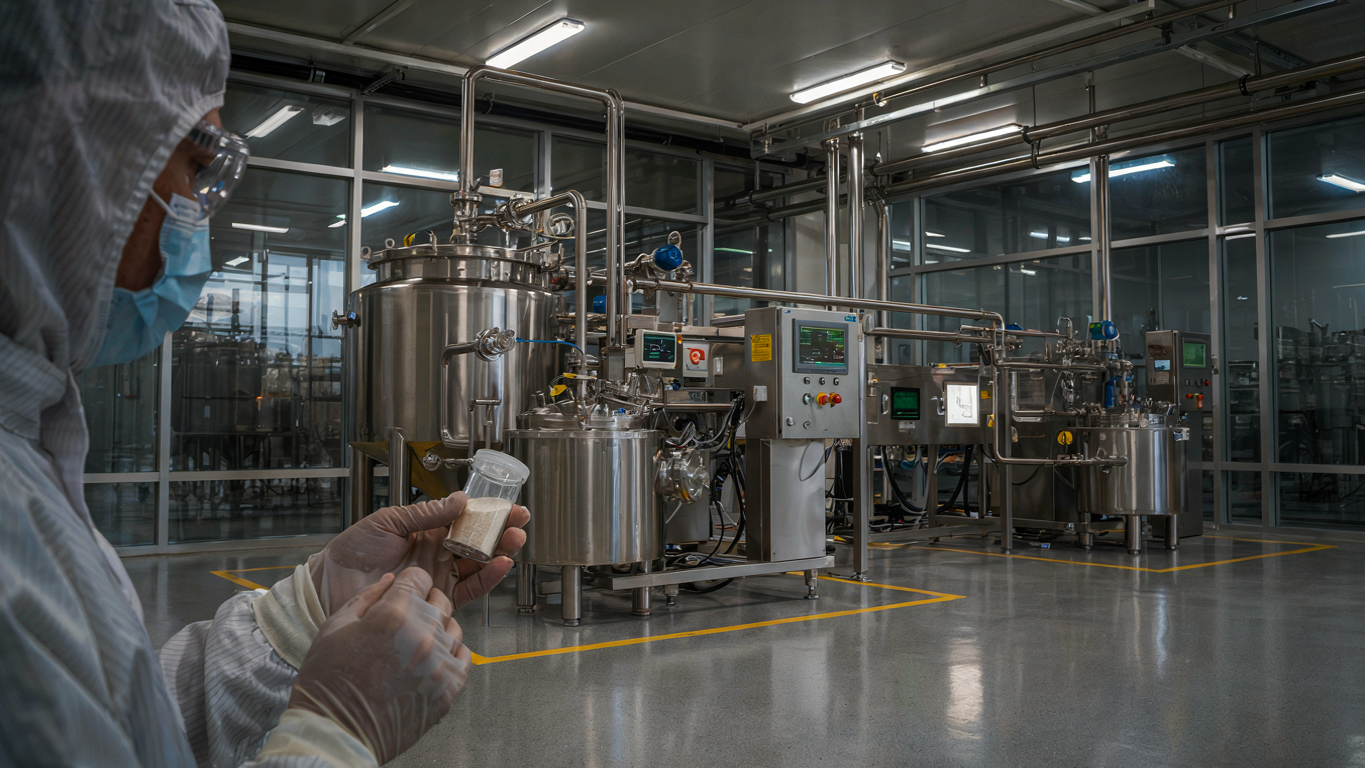
This is where Green Li-ion's positioning sits, and the 2026 shakeout has made the model's fit with the moment more visible. The company's GREEN HYDROREJUVENATION™ process is designed to convert black mass directly into 99% pure pCAM without third-party refiners, without shipping intermediates overseas, and without waiting on external processors. The platform is modular by design. Individual processing lines run at 730 metric tonnes per year and deploy adjacent to feedstock generation, which is the same operational geometry the Ascend and Li-Cycle failures suggest the industry actually needs. The modular platform accepts unsorted black mass from mixed chemistries including NMC, NCA, and LFP, which matters because the OEM feedstock mix continues to shift toward LFP. Fastmarkets confirmed in July 2024 that Green Li-ion had already started producing battery-grade cathode and anode materials from black mass at its Atoka, Oklahoma facility, which remains one of the few operational commercial-scale sites in North America producing finished battery-grade recycled materials at all, and it did so without requiring a billion-dollar single-site construction bet.
Policy Tailwinds: The EU Says "In the Cell, Not on Paper"
Two policy environments are pushing the industry in the same direction, and both favor recyclers that produce finished battery-grade recycled materials over those that stop at shredded intermediates.
The European Union's Battery Regulation 2023/1542 makes this explicit. Starting August 18, 2031, batteries placed on the European market must contain minimum thresholds of EU recycled content mandates require recycled material back in new cells, at 16 percent recycled cobalt, 6 percent recycled lithium, 6 percent recycled nickel, and 85 percent recycled lead. The thresholds rise again in 2036. What matters for the black mass conversation is what the regulation counts. Recovered black mass sitting in a warehouse or shipped to an offshore refiner does not qualify. The regulation counts recycled material that actually gets reintroduced into a new battery cell, verified through the digital battery passport system, audited by notified bodies, and traceable through the complete supply chain. Recyclers that finish the material in battery-grade form supply that demand. Recyclers that ship black mass supply the refiner that supplies that demand, minus a margin.
US policy is converging on the same conclusion from a different direction. The Defense Logistics Agency issued a July 2026 lithium carbonate solicitation that treats lithium as a strategic material, not a spot commodity. Green Li-ion's coverage of that shift examines how a resilient domestic supply chain requires recyclers to keep black mass onshore and deliver federal-tier battery-grade materials that meet procurement specifications. The USGS Mineral Commodity Summaries 2026 reinforced the strategic frame with a stark data point: US net imports of processed metals and materials more than doubled from $77 billion in 2024 to $185 billion in 2025. Every ton of domestic pCAM produced from recycled feedstock is a ton the country does not have to import.
The China Question: Why Domestic pCAM Production Is the Hedge
The lithium price rebound is only one signal from a market repricing supply-chain concentration risk. Zimbabwe's February 2026 export ban on raw lithium concentrates affected roughly 10 percent of global supply and pushed prices sharply higher. China's April 2025 controls on seven heavy rare-earth elements, extended in October 2025 to include internationally made products containing Chinese-sourced rare earths, sit alongside the graphite export restrictions already in force. Democratic Republic of the Congo, Mozambique, and Zimbabwe have all rolled out export controls on cobalt, lithium, or graphite. IEA executive director Fatih Birol summarized the pattern in the July 2026 report: vast economic value depends on relatively small volumes of critical minerals whose supply chains remain highly concentrated and are therefore vulnerable.
Recycled lithium sits outside that risk. It cannot be embargoed by a producing country because it originates in end-of-life batteries already inside the destination market. Green Li-ion's analysis of the recycled lithium as a hedge against resource nationalism position makes the case directly: recycled supply is the only pathway that is structurally immune to the policy tools that primary supply chains keep getting hit with. That structural immunity has commercial value regardless of where lithium prices sit in any given quarter, and that value is captured most fully by recyclers that finish the material into battery-grade recycled materials on domestic soil. Import substitution only happens when battery-grade recycled materials actually meet cell manufacturer specifications and can move directly into cathode production.
What Procurement Teams Should Do Next
For OEMs, cell manufacturers, and procurement teams reading the 2026 shakeout, the practical question is which suppliers can actually deliver battery-grade recycled materials at commercial scale, and which are still trying to build that capacity. The list of operational sites is short. Green Li-ion's first commercial-scale U.S. facility producing recycled battery-grade materials in Atoka, Oklahoma is one of the few. The Atoka plant produces NCM hydroxide under a binding offtake agreement with WMC through 2030 and NCM hydroxide from American-recycled raw materials that has already been listed on the Metalshub platform for direct commercial sale.
The three questions procurement teams should be asking recyclers in mid-2026 are simple. First: do you produce battery-grade recycled materials at commercial scale today, or do you produce black mass that someone else finishes? Second: is your production capacity deployed through a modular architecture that can scale with our volume commitments, or does it depend on a single site that has to reach full construction before delivering anything? Third: can you demonstrate offtake agreements or third-party sales of finished product, or is your commercial track record limited to intermediate feedstock and pre-construction commitments? Recyclers who can answer yes to all three are positioned for the regulatory environment that arrives in 2028 and hardens in 2031. Recyclers who cannot answer yes are exposed either to the shred-and-ship commodity dynamics on one end or to the megaproject execution risk that produced the 2026 shakeout on the other. Sourcing battery-grade recycled materials from a modular domestic partner with operational history is the risk-adjusted procurement decision in the current environment.
Procurement teams ready to evaluate domestic battery-grade recycled materials supply can begin partnership conversations with qualified recyclers such as Green Li-ion, whose GREEN HYDROREJUVENATION™ lines process black mass directly into finished pCAM and lithium carbonate at 730 metric tonnes per year per modular line, with a presence across the US, Singapore, Korea, Germany, and Australia. The company's Atoka facility is the operational proof point for the argument this article makes: the recyclers who finish the material are the ones who survive.
The Honest Summary
The 2026 recycling industry shakeout was not caused by bad companies or the wrong strategy. Ascend Elements had real downstream technology, first-of-its-kind commercial lithium carbonate production in Georgia, and more than $1.1 billion in capital. Li-Cycle's Rochester Hub was built to produce battery-grade lithium carbonate from the same feedstock everyone else was chasing. Neither company failed because finishing the material was the wrong call. Both failed because a single billion-dollar downstream site is a fragile way to reach that outcome. When a policy shift or a commodity move hits mid-construction, there is nowhere to hide.
The structural mid-stream gap is still real. Fastmarkets documented US shredding capacity running at more than twice available scrap, refining capacity sitting at a fraction of shred output, and most black mass still exported to Asia for finishing. That gap will not close by building more megaprojects. It closes by deploying modular battery-grade recycled materials production adjacent to feedstock, one line at a time, with each line delivering finished product from day one rather than waiting on a multi-year construction ramp.
The commercial data supports the downstream thesis independently of how the failures are framed. Lithium carbonate has roughly tripled from its June 2025 lows, EU regulations require finished recycled content in new cells starting 2031, US net imports of processed metals doubled in a single year, and the IEA has quantified more than $6.5 trillion in downstream production exposure to a single concentrated supplier. Every one of those datapoints rewards recyclers whose product is finished, domestic, and specification-grade. Green Li-ion's GREEN HYDROREJUVENATION™ technology was built to produce battery-grade recycled materials at that specification through a modular architecture, and the Atoka facility is producing to that specification today without having required a single-site billion-dollar bet to get there. The industry did not need another company that could shred batteries, and it did not need another company that could promise finished materials at some future megaproject completion date. It needed companies that could deliver battery-grade recycled materials into new cell production, at commercial scale, through a model that survives the next commodity cycle. In 2026, that distinction became commercially unavoidable.

.svg)