
France's TGIR Battery Innovation Platform: How National Research Infrastructure Advances European Recycling Technology
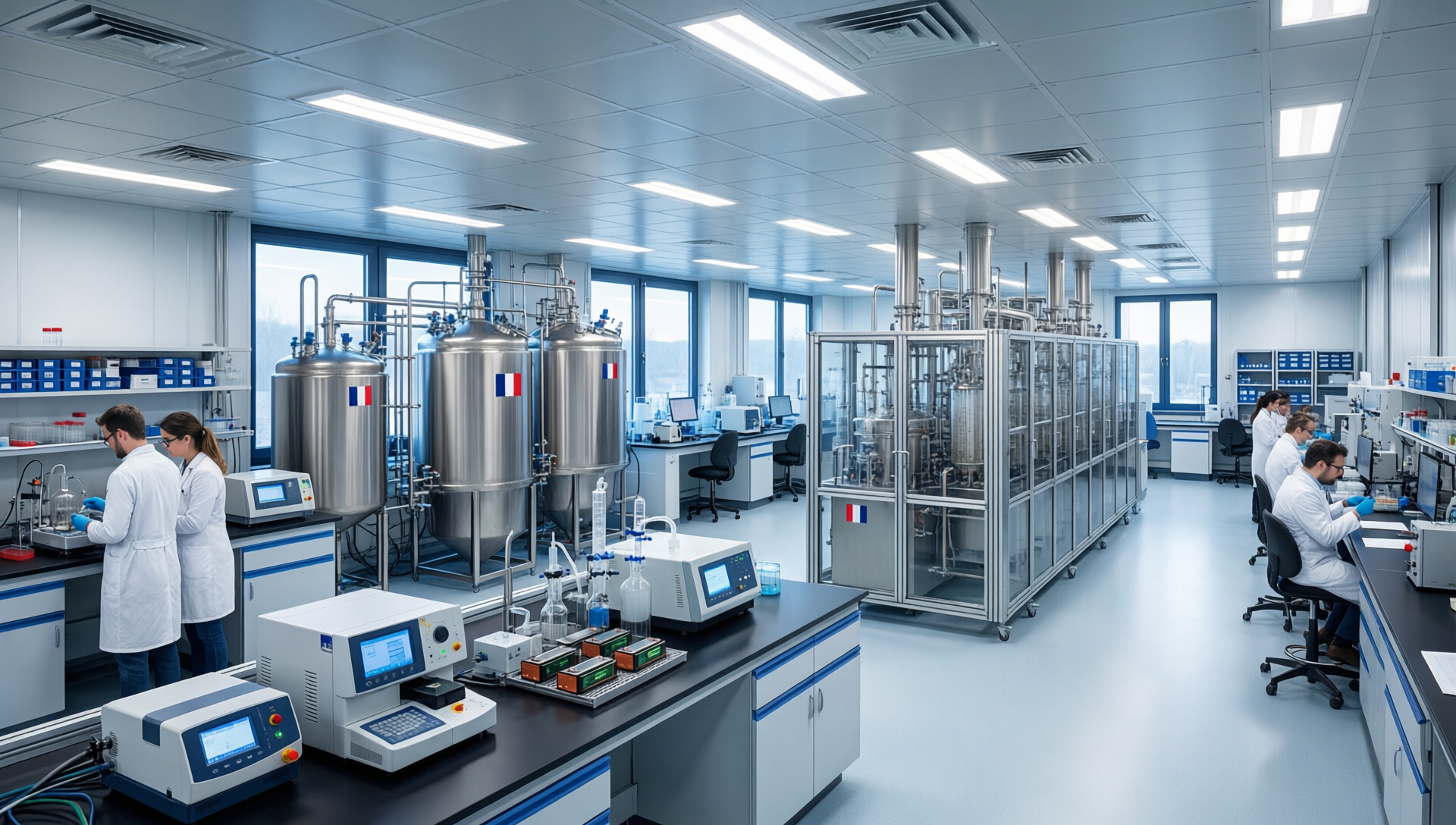
France has established itself as a cornerstone of European battery innovation through systematic deployment of national research infrastructure supporting both fundamental discovery and industrial-scale technology transfer. The country's approach centers on the RS2E research network (Réseau sur le Stockage Électrochimique de l'Énergie), a collaborative framework integrating 17 national laboratories, 15 industrial partners, and three government-funded technology transfer organizations under unified strategic direction. This infrastructure model demonstrates how coordinated public-private research ecosystems accelerate recycling technology development while supporting regional industrial clustering.
The RS2E network operates as a CNRS research initiative (Centre National de la Recherche Scientifique) coordinated by Professor Jean-Marie Tarascon of Collège de France and Professor Patrice Simon of Université Paul Sabatier, two internationally recognized specialists in electrochemical energy storage. Established in 2011 with Ministry of Higher Education and Research support, the network received Laboratoire d'Excellence designation from the French National Agency for Research, securing ten-year funding under the Investissements d'Avenir program. This long-term financial commitment enables medium-term research planning essential for breakthrough battery recycling technologies requiring multi-year development cycles.
RS2E Network Architecture: Integrating Discovery and Commercialization
The RS2E framework addresses a persistent challenge in battery technology development: the valley of death separating laboratory discoveries from commercial deployment. By embedding industrial partners directly within the research network structure, RS2E ensures that fundamental materials science advances immediately inform industrial process development. The 15 corporate participants span the battery value chain from materials suppliers through cell manufacturers to automotive integrators, creating natural pathways for technology transfer as innovations mature from laboratory scale through pilot production to gigafactory implementation.
This structural integration accelerates advanced recycling technology development by ensuring research programs address actual industrial constraints rather than purely theoretical optimization. Laboratory teams working on cathode material recovery processes, for example, design experiments using feedstock composition ranges reflecting real end-of-life battery waste streams rather than idealized single-chemistry samples. This industrial grounding increases the probability that research breakthroughs translate into commercially viable recycling operations.
The network's government partners—CEA (Commissariat à l'Énergie Atomique et aux Énergies Alternatives), IFPEN (IFP Énergies Nouvelles), and INERIS (Institut National de l'Environnement Industriel et des Risques)—contribute specialized capabilities in nuclear materials processing, petroleum refining adaptation, and environmental risk assessment. These institutions bring decades of experience managing complex chemical processes at industrial scale, expertise directly applicable to battery recycling operations requiring precise control of hydrometallurgical reactions, solvent extraction sequences, and product purification protocols.
France's Battery Valley: Geographic Clustering Amplifies Research Impact
The RS2E network's research outputs feed directly into France's emerging "Battery Valley" in the Hauts-de-France region, where geographic clustering creates powerful network effects. The Dunkirk-Douai-Douvrin triangle hosts multiple gigafactories alongside cathode precursor plants and recycling facilities, enabling rapid knowledge transfer from research institutions to production environments. This co-location reduces transaction costs for collaborative projects while accelerating manufacturing learning curves as process innovations diffuse across the regional ecosystem.
Verkor's recently inaugurated Dunkirk gigafactory exemplifies this research-to-production pipeline. The company's December 2025 facility opening under President Emmanuel Macron's patronage represents the culmination of innovation work conducted at the Verkor Innovation Centre in Grenoble—itself a node within the broader RS2E research network. With initial capacity of 16 GWh annually and planned expansion to 50 GWh by 2030, the facility creates immediate demand for recycled battery materials, establishing market pull for advanced recycling technologies emerging from RS2E laboratories.
The regional battery ecosystem extends beyond cell manufacturing to encompass the full circular economy infrastructure. Orano's cathode active material production and recycling facility, designated as strategically important by the European Commission in March 2025, demonstrates French commitment to integrated value chains. By co-locating precursor cathode active material (pCAM) production, cathode active material (CAM) manufacturing, and hydrometallurgical recycling operations on a single 53-acre Dunkirk site, Orano creates closed-loop material flows minimizing transportation costs while ensuring recycled output quality meets strict battery manufacturing specifications.
Extended Producer Responsibility Implementation Drives Research Priorities
France's leadership in EPR system development shapes RS2E research priorities toward technologies enabling efficient compliance with European battery regulation requirements. The Future is NEUTRAL initiative, operating France's first approved Individual System for electric vehicle battery end-of-life management as of November 2025, provides real-world testing grounds for recycling innovations developed within the RS2E network.
The system's GAIA subsidiary has repaired over 18,000 batteries since 2012, achieving repair rates exceeding 90% for defective units. This operational data informs RS2E research into diagnostic technologies enabling accurate state-of-health assessment, battery management system optimization extending operational lifetime, and second-life application matching protocols. By maintaining batteries in automotive service longer and facilitating stationary storage repurposing, these technologies reduce the volume of material requiring ultimate recycling while maximizing cumulative battery utility—key objectives for circular economy principles.
The EPR framework's collection target obligations create quantifiable performance metrics guiding recycling technology development. With portable battery collection rates mandated at 63% by 2027 and 73% by 2030, research into efficient collection logistics, transportation safety protocols, and consolidated processing operations addresses practical barriers to achieving regulatory compliance. RS2E laboratories developing automated disassembly systems, for instance, focus on processing mixed battery chemistries typical of consolidated collection streams rather than single-chemistry flows characteristic of manufacturing scrap recycling.
Hydrometallurgical Innovation: RS2E's Core Technical Focus
RS2E research programs emphasize hydrometallurgical processing routes aligned with European preferences for aqueous chemistry over pyrometallurgical smelting. This strategic direction reflects several considerations: hydrometallurgy enables selective metal recovery preserving lithium (typically lost to slag in pyrometallurgical routes), operates at lower temperatures reducing energy consumption and carbon emissions, and produces separated metal salt outputs suitable for direct reintroduction into cathode precursor manufacturing without extensive additional refining.
Network laboratories investigate novel leaching chemistries reducing dependency on concentrated mineral acids while maintaining high extraction efficiencies for nickel, cobalt, manganese, and lithium. Organic acid systems, deep eutectic solvents, and ionic liquid formulations represent promising alternatives offering environmental advantages through lower reagent toxicity, reduced waste generation, and potential for closed-loop solvent recycling. These academic investigations inform industrial partner process development, with successful laboratory demonstrations advancing to pilot-scale validation at partner facilities before potential gigafactory implementation.
Solvent extraction optimization constitutes another critical research domain. The selective separation of nickel, cobalt, and manganese from complex leach solutions requires carefully designed extractant systems and multi-stage countercurrent operations. RS2E teams develop improved extractant molecules offering enhanced selectivity, faster mass transfer kinetics, and greater stability under recycling process conditions. This fundamental chemistry research directly supports industrial operations: more efficient separations reduce reagent consumption, decrease processing time, and improve product purity—all factors influencing recycling economic viability.
Sodium-Ion Technology: Diversifying Battery Chemistry Portfolio
RS2E's research scope extends beyond lithium-ion recycling to encompass emerging battery chemistries including sodium-ion systems. Tiamat Energy, an RS2E spinout company, exemplifies this technology diversification strategy. The firm announced plans in 2024 for a 5 GWh sodium-ion production facility in Amiens, with initial 700 MWh capacity targeted for late 2025 and full-scale operations by 2029. This industrial commitment validates years of sodium-ion research conducted within the RS2E network.
Sodium-ion technology offers several advantages for specific applications: abundant sodium resources eliminate supply chain vulnerabilities associated with lithium, cobalt, and nickel; inherent safety characteristics reduce fire risk in stationary storage deployments; and potentially lower material costs improve economics for power tools and grid storage where energy density requirements are less stringent than automotive applications. From a recycling perspective, sodium-ion batteries simplify material recovery by eliminating expensive critical minerals, though the technology still requires effective end-of-life management systems as deployment scales.
The RS2E network's involvement in sodium-ion development demonstrates how national research infrastructure can support multiple parallel technology pathways. Rather than concentrating exclusively on dominant lithium-ion chemistries, the network maintains capacity for exploratory research into alternative systems that may address niche applications or provide strategic hedges against material supply disruptions. This diversification ensures French battery innovation remains adaptable as global markets evolve and new applications emerge.
Solid-State Battery Research: Positioning for Next-Generation Technologies
RS2E laboratories actively investigate solid-state battery technologies representing potential next-generation performance improvements. Solid electrolytes replacing liquid organic electrolytes offer theoretical advantages including higher energy density through lithium metal anode compatibility, improved safety by eliminating flammable liquid components, and potentially longer operational lifetimes through reduced degradation mechanisms. These performance enhancements could transform electric vehicle economics by extending range while reducing battery pack size and weight.
ProLogium's selection of France for its first overseas solid-state gigafactory, with construction planned for late 2026 or early 2027, validates French research capabilities in advanced battery technologies. The company evaluated 90 potential sites across 13 countries before choosing a Dunkirk location within the Battery Valley cluster. Decisive factors included low-carbon electricity availability, proximity to existing gigafactory ecosystem infrastructure, and access to research talent and capabilities—including RS2E network expertise in solid-state materials development and characterization.
From a recycling perspective, solid-state batteries present distinct challenges and opportunities. Solid electrolytes may require different disassembly approaches compared to liquid electrolyte systems, and material separation processes must adapt to novel electrode and electrolyte compositions. RS2E research into solid-state battery recycling prepares French industry for these future requirements, ensuring recycling capabilities keep pace with manufacturing technology evolution. This forward-looking approach prevents the emergence of recycling capability gaps as new battery chemistries reach end-of-life volumes.
Market Realities: Navigating European Battery Industry Challenges
The French battery ecosystem confronts significant market challenges despite substantial research infrastructure and industrial investments. The October 2024 suspension of Eramet and Suez's joint recycling project in Dunkirk illustrates tensions between ambitious circular economy goals and current market economics. The partners cited slow European battery factory ramp-up creating insufficient feedstock supply, alongside lack of confirmed customers for recycled metal salts due to limited European cathode precursor project commitments.
These market dynamics reflect broader European battery industry struggles. While multiple gigafactories have reached operational status, production volumes remain below original projections as automotive demand for electric vehicles grows more slowly than anticipated during the planning phases of 2021-2023. This demand shortfall cascades through the value chain: lower cell production reduces manufacturing scrap generation, slower EV adoption delays end-of-life battery returns, and uncertain demand for recycled materials discourages recycling infrastructure investment.
The RS2E research network provides strategic value during these challenging market periods by maintaining technological development momentum despite temporary commercial setbacks. Laboratory research continues advancing hydrometallurgical process efficiencies, developing lower-cost separation technologies, and improving product quality specifications—work that will prove essential when market conditions improve and recycling economics become favorable. This long-term institutional commitment prevents the loss of accumulated expertise that would occur if research programs scaled back during market downturns.
Digital Battery Passport Integration: Data Infrastructure for Circular Economy
RS2E research increasingly addresses digital infrastructure requirements supporting battery circular economy operations. The European Battery Regulation's digital passport mandate, becoming enforceable February 2027 for industrial batteries, electric vehicle batteries, and light means of transport batteries exceeding 2 kWh capacity, requires comprehensive data management systems tracking battery composition, performance history, and state-of-health throughout operational lifetimes.
Network laboratories develop algorithms for state-of-health estimation using operational data from battery management systems, machine learning approaches for remaining useful life prediction, and diagnostic protocols identifying optimal pathways for second-life applications or material recovery. These analytical capabilities transform digital passport data from compliance documentation into decision-support tools optimizing battery utilization and recycling operations. By extracting actionable intelligence from passport information, French industry can maximize economic value recovery while ensuring regulatory compliance.
The passport infrastructure also creates opportunities for improved recycling process control. Accurate battery chemistry information accessed through passport QR codes enables recyclers to optimize processing pathways before disassembly begins, sorting incoming batteries into homogeneous chemistry batches for more efficient downstream processing. State-of-health data informs decisions about repair viability versus recycling, while manufacturing provenance information supports due diligence verification and recycled content tracking for regulatory reporting.
Low-Carbon Manufacturing: Leveraging French Nuclear Electricity
France's predominantly nuclear electricity grid provides structural competitive advantage for battery manufacturing and recycling operations. With over 70% of electricity generation from nuclear sources, French industrial facilities access some of Europe's lowest-carbon power at competitive prices. This energy profile directly supports battery sustainability objectives: lower manufacturing carbon footprints help products meet European carbon footprint declaration requirements, while recycling operations demonstrate favorable lifecycle emissions compared to primary material production.
Verkor's power purchase agreement with EDF, securing twelve-year nuclear allocation for its Dunkirk gigafactory, exemplifies strategic exploitation of this advantage. The company markets its cells as among the lowest-carbon batteries globally—a claim substantiated by lifecycle assessment incorporating French grid electricity emissions factors. For recycling operations, access to low-carbon electricity amplifies environmental benefits: already favorable recycling emissions profiles relative to mining become even more compelling when processing energy comes from nuclear sources rather than fossil-fueled generation.
This structural advantage positions France competitively as European battery regulations increasingly emphasize carbon footprint performance. Maximum carbon footprint thresholds, potentially introduced in future regulatory updates, could create market access barriers for products manufactured using high-carbon electricity. French producers and recyclers leveraging nuclear power maintain compliance margin protecting against regulatory tightening while supporting premium positioning for environmentally conscious customers prioritizing supply chain carbon intensity.
Regional Development Strategy: Jobs and Economic Revitalization
France's battery infrastructure investments serve dual objectives: establishing technological leadership in strategic industries while revitalizing industrial regions affected by traditional manufacturing decline. The Hauts-de-France region, historically dependent on steel production, coal mining, and textile manufacturing, has experienced decades of economic transition as these sectors contracted. Battery gigafactories and recycling facilities represent contemporary industrial development creating skilled employment in communities possessing strong manufacturing traditions but requiring new economic anchors.
Verkor's Dunkirk gigafactory creates approximately 1,200 direct jobs and 3,000 indirect positions—substantial employment generation for a regional economy. Combined with AESC's Douai facility, ACC's Douvrin operations, and planned ProLogium and Orano facilities, the Battery Valley cluster could employ 10,000+ workers directly in battery-related activities by 2030. This employment concentration creates secondary economic benefits through housing demand, retail activity, and service sector growth, multiplying the initial industrial investment's regional impact.
The RS2E network contributes to this regional development strategy by ensuring workforce skill development keeps pace with industrial needs. University laboratories within the network train graduate students and postdoctoral researchers who populate industry R&D teams, while continuing education programs transfer knowledge to existing industrial workforce populations. This talent pipeline addresses a critical constraint on rapid battery industry scaling: the availability of personnel combining electrochemistry expertise with industrial process knowledge.
International Collaboration: Positioning Within European Battery Alliance
French battery infrastructure development occurs within the broader European Battery Alliance framework established in 2017 to foster competitive European battery value chains. The RS2E network maintains collaborative relationships with research institutions across Europe, participating in EU-funded programs like Horizon Europe that support cross-border battery technology development. These international linkages ensure French innovations contribute to pan-European competitiveness rather than fragmenting into nationally siloed efforts.
The collaborative approach recognizes that European battery industry success requires coordinated action across multiple countries, each contributing comparative advantages. France offers nuclear electricity, established chemical industry expertise, and strong fundamental research capabilities. Germany contributes automotive integration knowledge and engineering precision. Sweden provides hydropower resources and process industry experience. Nordic countries supply critical minerals from domestic deposits. By aligning these complementary strengths through collaborative research and coordinated industrial policy, Europe builds integrated value chains competitive with Asian battery industry incumbents.
French participation in European battery programs also ensures access to non-French innovations. RS2E industrial partners can license technologies developed at German, Swedish, or Belgian research institutions through European collaboration agreements, accelerating French recycling capability development by incorporating best practices regardless of geographic origin. This openness to external knowledge prevents not-invented-here syndrome that could slow French technological progress by limiting solutions to domestically developed approaches.
Strategic Implications: Research Infrastructure as Industrial Policy Tool
The RS2E model demonstrates how sustained research infrastructure investment serves strategic industrial policy objectives. By maintaining continuity of funding and institutional capacity over decade-plus timeframes, France creates conditions enabling breakthrough technology development requiring long research cycles. This patient capital approach contrasts with short-term commercial investment horizons, addressing a market failure where socially valuable long-term research receives insufficient private funding due to extended payback periods and uncertain commercialization outcomes.
The network structure itself represents deliberate industrial organization. By integrating academic laboratories, government research centers, and industrial partners within unified governance frameworks, RS2E reduces coordination costs and accelerates knowledge transfer compared to arm's-length relationships between separate institutions. Shared research priorities, co-funded projects, and personnel exchanges create dense communication networks facilitating rapid diffusion of innovations from discovery through development to deployment.
This institutional model offers lessons for other regions seeking to develop battery industry capabilities. Successful ecosystem development requires more than gigafactory construction—it demands supporting research infrastructure generating continuous innovation, workforce development programs ensuring talent availability, and policy frameworks aligning public and private incentives. France's integrated approach combining RS2E research capacity with Battery Valley industrial clustering and supportive government policy creates conditions for sustainable competitive advantage in battery technologies including closed-loop material recovery systems.
Future Directions: Research Priorities for Evolving Markets
As European battery markets mature, RS2E research priorities adapt to address emerging challenges and opportunities. Recycling technology development increasingly emphasizes economic viability alongside technical performance, recognizing that even highly efficient processes require positive business cases for large-scale deployment. Research into lower-cost separation technologies, reduced reagent consumption, and improved metal recovery economics directly addresses commercial barriers limiting recycling industry growth.
The network also expands focus beyond lithium-ion to encompass diverse battery chemistries including sodium-ion, lithium-iron-phosphate, and eventual solid-state systems. This chemistry-agnostic approach ensures French recycling capabilities remain relevant as battery technology evolves. By developing flexible processing platforms adaptable to multiple chemistries rather than single-chemistry optimized facilities, French recyclers can maintain high utilization rates despite shifting market chemistry preferences.
Advanced characterization capabilities represent another research frontier. Non-destructive diagnostic technologies enabling rapid battery assessment inform triage decisions routing incoming units toward repair, second-life applications, or material recovery based on actual condition rather than conservative assumptions. These analytical tools maximize economic value extraction from battery waste streams while reducing unnecessary processing costs for units retaining significant utility potential.
Conclusion: National Research Infrastructure as Circular Economy Catalyst
France's TGIR battery innovation platform exemplifies how coordinated national research infrastructure accelerates circular economy technology development. The RS2E network's integration of academic excellence, government research capabilities, and industrial partnerships creates an innovation ecosystem generating continuous advances in recycling technologies while ensuring rapid translation from laboratory discovery to commercial deployment. This institutional framework demonstrates that effective circular economy transitions require more than regulatory mandates—they demand supporting research infrastructure generating the technological solutions enabling compliance at economic cost points.
The French model's emphasis on long-term institutional commitment, public-private collaboration, and geographic clustering offers valuable lessons for regions worldwide seeking to develop battery industry capabilities. As global battery production scales and end-of-life volumes increase, the recycling technologies emerging from RS2E laboratories and deploying in France's Battery Valley industrial cluster will influence European circular economy performance and strategic material supply security.
For battery recycling technology providers like Green Li-ion, the French research ecosystem represents both competitive benchmark and potential collaboration partner. Advanced hydrometallurgical processing approaches developed within RS2E network laboratories complement proprietary innovations like GREEN HYDROREJUVENATION™ technology, creating opportunities for knowledge exchange and process optimization. As European recycling requirements intensify and market volumes grow, the innovations emerging from France's research infrastructure will shape industry best practices and competitive dynamics across the circular battery economy.

.svg)